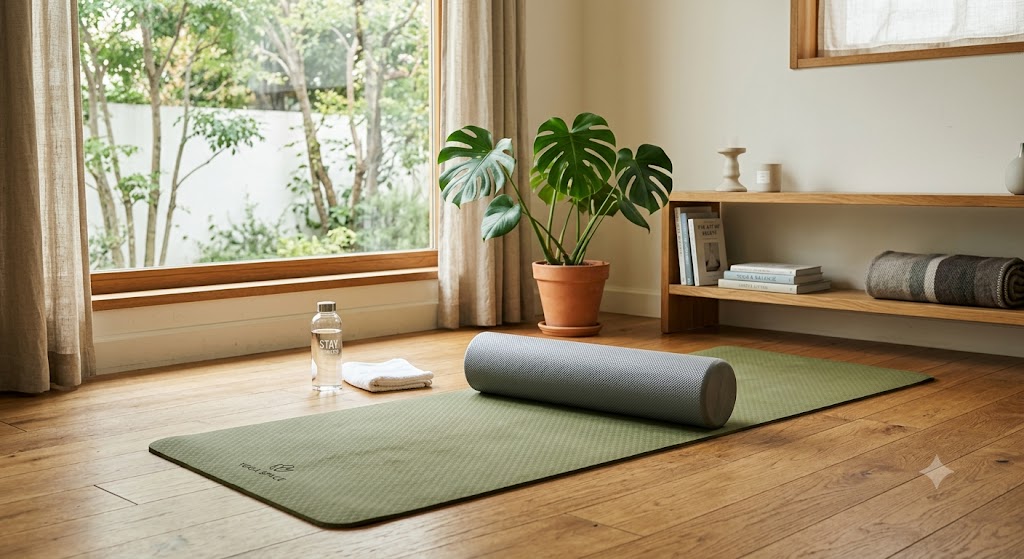
Deep breathing is key to opening up and defining the collarbone area.
I’ve noticed that I tend to have an overactive sympathetic nervous system, which often causes shallow breathing. Even now, it happens from time to time. But I’ve found that doing a simple daily stretch—like the one I’m about to share—helps me breathe more deeply and comfortably.
Why Shallow Breathing Can Affect the Appearance of Your Collarbones
Have you ever noticed how tension seems to build up around your neck and collarbones when your breathing feels shallow?
When you breathe shallowly, the muscles around your neck and collarbones—like the sternocleidomastoid and scalene muscles—end up working harder than they need to.
This can cause:
- Tightness and raised tension around the collarbone area
- A neck that looks shorter or more compressed
- Less visible and less defined collarbone lines
What Happens When You Breathe More Deeply?
With healthy breathing, the diaphragm does most of the work. As the diaphragm moves, the rib cage expands and the chest naturally opens. This movement also influences the shoulder blades and surrounding muscles.
When breathing becomes deeper and more efficient, several positive changes can occur:
- More space is created beneath the collarbones.
- The décolletage appears more open and refined.
- The natural contour of the collarbones becomes easier to see.
The Serratus Anterior: A Key Muscle for Breathing and Posture
One important muscle involved in this process is the serratus anterior, which connects the ribs to the shoulder blade.
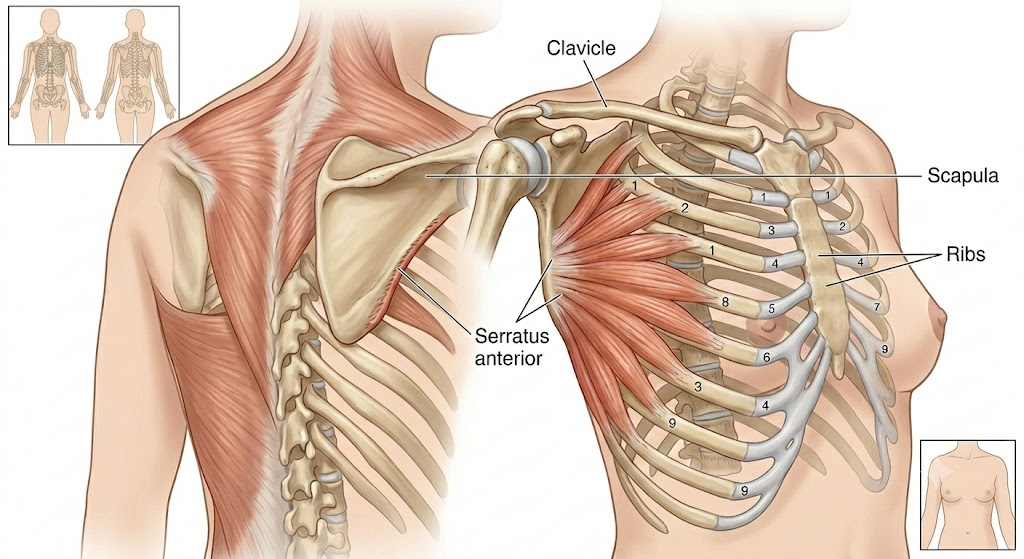
When this muscle becomes tight or restricted:
- The rib cage cannot expand as efficiently.
- Breathing tends to become shallower.
- Tension can accumulate around the collarbones and upper chest.
When the serratus anterior is able to move freely:
- Breathing becomes deeper and more efficient.
- The décolletage appears more open and balanced.
- The collarbone area looks more defined.
More Than Just a Breathing Exercise
I’ve shared this stretch before, but it’s worth mentioning again because of how effective it can be.

In addition to supporting deeper breathing, it also helps improve mobility around the shoulder blades and upper back. Because of this, I often recommend it to people who spend long hours at a desk or experience frequent neck and shoulder tension.
I first introduced this stretch several years ago in my article about creating a more defined collarbone area, but because it remains one of the techniques I use most often myself, I wanted to revisit it here.
How to do it
- Place a stretch pole under your armpit so that it is positioned perpendicular to your body.
- Keeping your elbow bent and resting on the floor, draw your shoulder blade back. Let your elbow follow the movement.
- Once you have pulled your shoulder blade back as far as you comfortably can, keep that position and slightly change the angle of your elbow. Repeat a few times while maintaining the pull.
- From the fully pulled-back position, slowly reach your arm forward as far as you can.

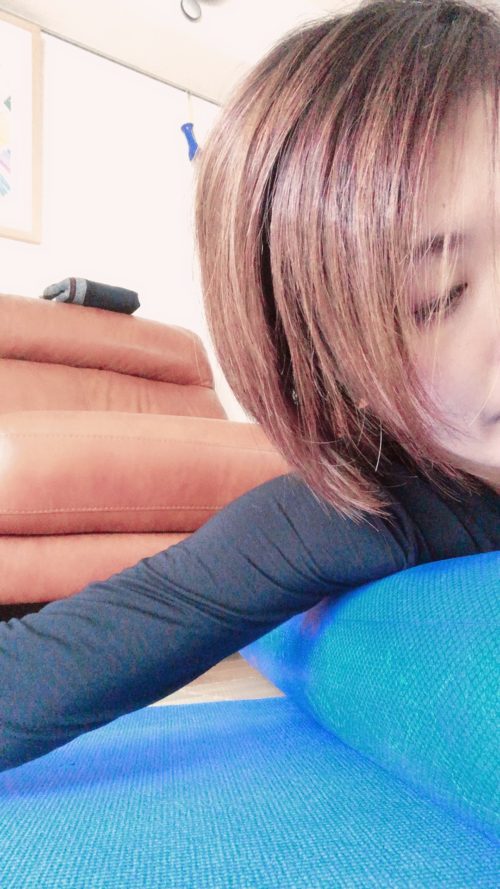
🩷 As you reach forward, imagine lengthening the muscles under your armpit and reaching far away with your fingertips.
At the same time, keep your ribs gently down, creating a sense of opposition between your reaching arm and your rib cage.
I tend to have an overactive sympathetic nervous system, which can make my breathing shallow at times.
By practicing this exercise daily, I’ve noticed that my breathing feels deeper, more balanced, and more relaxed.
As an added benefit, it also helps relieve tension in my shoulders and neck.
Give it a try and see how it feels.
Sometimes the simplest daily habits can make a noticeable difference—not only in how you breathe, but also in how your posture, neck, shoulders, and collarbone area look and feel.