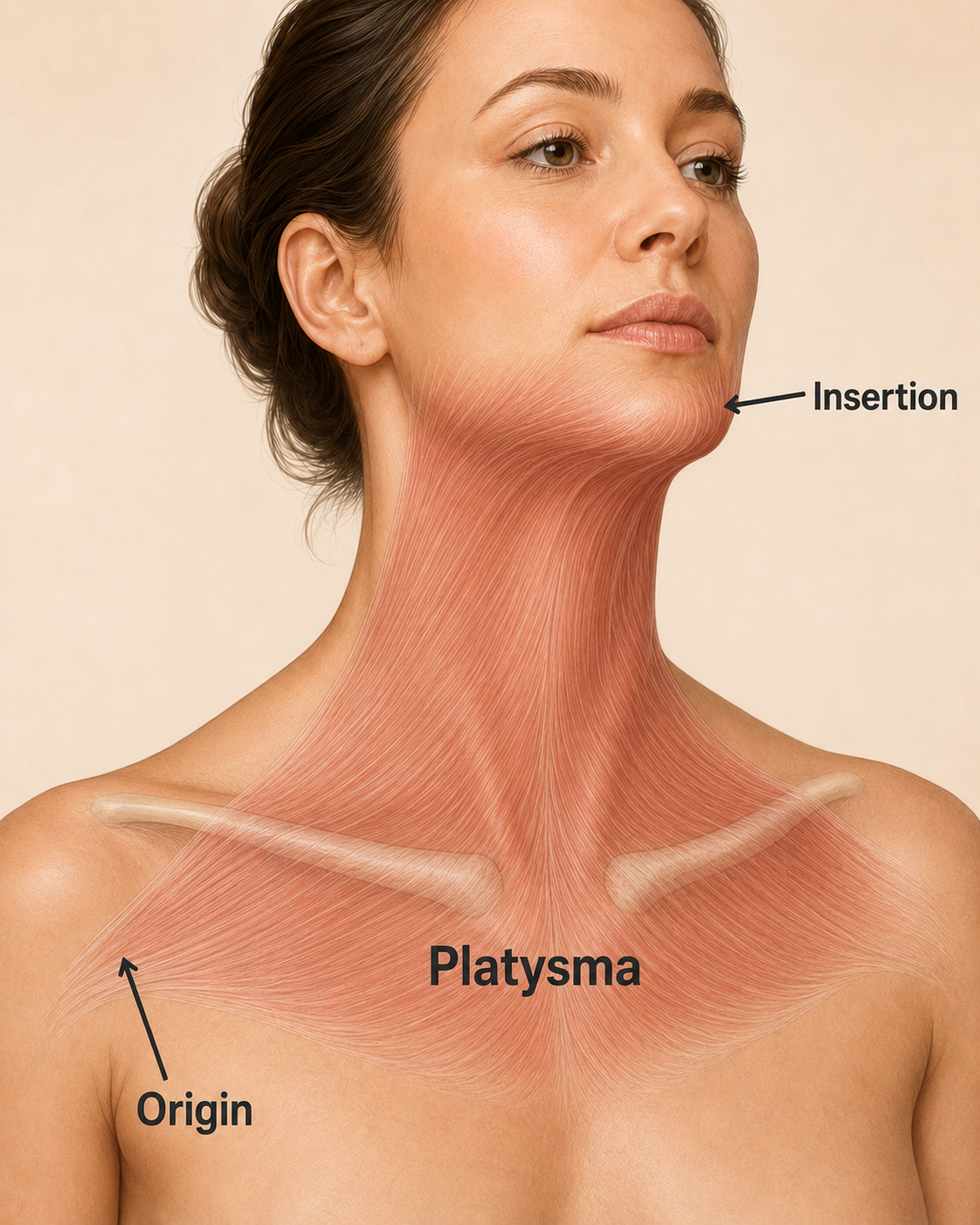
Why do our cheeks look sunken as we age?
Several factors can contribute to sunken cheeks as we age, making us look older and tired.
Possible Causes
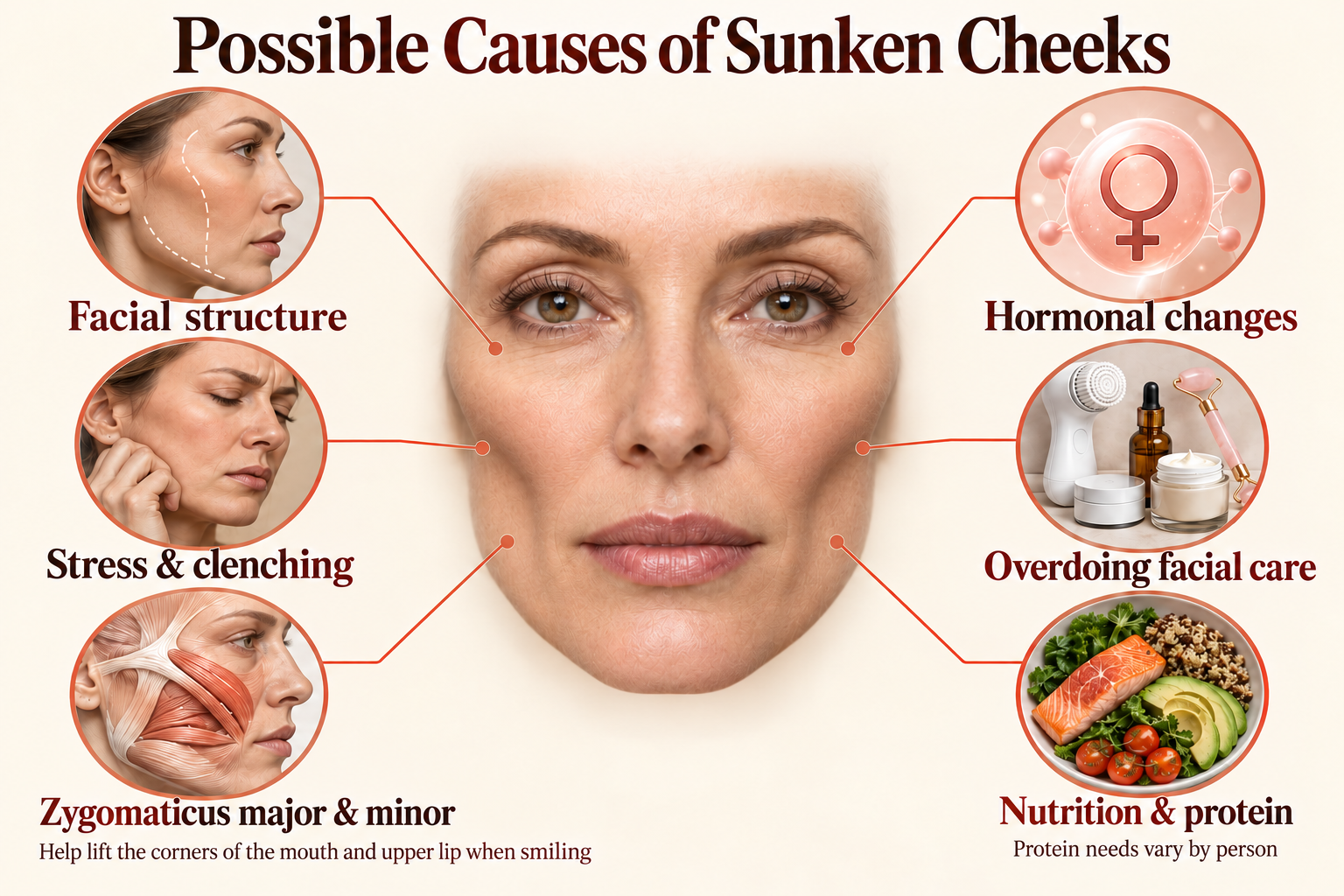
- Prolonged stress or clenching your teeth can cause the masseter and temporalis muscles to become tense. In my experience, this kind of muscle tension can affect facial support, making sagging and nasolabial folds more noticeable. This can make your face look sunken and tired.
- When the function of the zygomaticus major and minor muscles, which are related to cheek plumpness, weakens, the face may look tired.
- As estrogen levels decrease, changes in collagen and elastin can make it harder to maintain skin firmness.
- Over-massaging, overusing facial devices, or overexercising your facial muscles can affect the appearance of your cheeks and make them look sunken.
- An unbalanced diet and insufficient protein intake can also affect the skin and muscles. Protein needs vary from person to person.
What to Keep in Mind
I avoid massaging the sunken areas of the cheeks directly. Instead, I focus on releasing tension in the neck and temporalis muscles.
It is generally recommended that you lift the corners of your mouth. I encourage clients to imagine puffing out their cheeks while focusing on the area around the zygomatic muscles. This may help lift their cheeks and the corners of their mouths naturally.
Since my late 40s, I’ve prioritized maintaining hormonal balance.
This approach grew out of my own self-care as I worked to address my concerns about my appearance. Some clients have also noticed that their cheeks look more lifted and less sunken after following my home-care advice.

The causes vary from person to person because several factors can be involved, including facial structure, habitual facial expressions, lifestyle, and hormonal balance. It’s important to look beyond the surface and consider internal factors as well.
My Approach After 50
I started developing new care methods based on physiology and anatomy only after I turned 50. I can clearly see the results, and my approach is different from what I used in my 40s.
From your late 40s onward, it becomes important to continue care that suits you while also paying attention to hormonal changes and daily nutrition.
If you want to address sunken cheeks and maintain a fuller, healthier look, care from within matters too. I’m currently preparing a manual to help you adjust your skincare and nutrition to your skin’s condition.
Beautiful skin doesn’t happen overnight. Consistency matters most.
The manual is coming soon.
Who This Approach is For
My home-care approach isn’t only for sunken cheeks. I tailor the home care I teach to each person’s condition and face shape. The facial muscles I work on differ from person to person, too.
If any of these sound familiar:
The care that worked for me 10 years ago no longer makes a difference.
I kept following the same routine, but my cheeks became hollow.
I don’t know what to trust anymore.
I want to learn from a professional.
I’m not ready to try aesthetic treatments yet.
My skin changed during menopause, and I want to understand and address the causes.
I have sensitive skin and don’t know what to do.
Please feel free to contact me. I don’t offer free coaching, but I do offer consultations about my courses.