Black circles under the eyes are often linked to aging, usually appearing as dark shadows caused by hollowness or sagging around the eyes.
Unlike brown dark circles, they’re not always due to pigmentation. Sometimes, the darkness you see is actually a shadow created by the shape of the under-eye area.
That’s why the darkness can look different depending on lighting, angle, or how your face is positioned—you might notice it more when looking downward.
Unfortunately, this type of dark circle is hard to cover with makeup. If the shadow comes from changes around the eyes, simply applying concealer won’t fix it.
At the end of last year, I wrote about brown and bluish dark circles. Which type do you think you have?

What Causes Dark Shadows Under the Eyes?
Dark circles aren’t always about pigmentation; sometimes, shadows are caused by the contours under your eyes.
Here are some common reasons:
UV Damage
Sun exposure damages skin and affects collagen production. Over time, skin loses firmness and elasticity.
Loss of Elasticity
As collagen and elastin decline with age, the skin around your eyes thins and becomes less firm, making hollows and shadows more visible.
Puffiness
Swelling can change the shape of the under-eye area and deepen shadows. If you often wake up with puffy eyes, it’s worth paying attention to.
Dryness
The skin around your eyes is thin and moves constantly when you blink or express emotions. Dryness can make fine lines and texture changes more noticeable.
Muscle Weakness Around the Eyes
Muscles like the orbicularis oculi influence how your eye area looks.
Lack of Sleep and Stress
Tiredness and stress can make your face look dull or puffy, intensifying under-eye shadows.
Tension in the Forehead and Scalp
Our eyes don’t work alone. When you spend long hours in front of a computer or on your phone, tension builds up in your forehead and scalp, and that can really show around your eyes.
The frontalis muscle is connected to the scalp and the muscles around the eyes, so tension from intense concentration or stress can affect the eye area.
I’ve definitely noticed this myself. Whenever I spend long hours studying for the TOEIC, the dark circles under my eyes get much worse. During those times, I focus on releasing tension in my scalp and the frontalis muscle in my forehead. It really helps reduce those shadows and makes a big difference.
How Can You Improve the Appearance of Dark Shadows?
Protect Your Skin from UV Rays
Sun damage is a major cause of skin aging. Use sunscreen regularly and consider sunglasses or a parasol when needed. For more on nutrition and pigmentation, see my article about brown dark circles.
Keep the Eye Area Moisturized
The eye skin is delicate, so hydration is key. Use an eye cream, but be gentle—avoid rubbing or pulling the skin.
Manage Puffiness
If your eyes feel puffy, try alternating warm and cool towels or wet cotton pads. Gently stimulate pressure points around your eyebrows when applying cream.
Address the Forehead and Scalp as Well
While exercising the muscles around your eyes can help, remember that the eye area connects to your forehead and scalp. In my method, I often start by releasing tension in those areas.
Move the Muscles Around Your Eyes
1. Try closing your eyes by lifting only your lower eyelids. Imagine closing your eyes from the bottom up.
2. If that feels difficult, lightly place your fingers on your lower eyelids, as shown in the photo, to help you feel the movement.
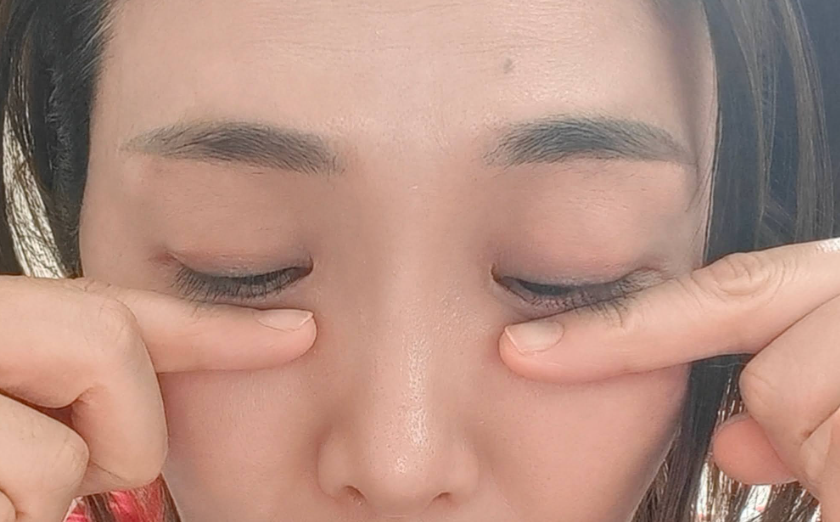
The approach varies depending on the individual’s shadow shape. Advanced techniques are reserved for private clients, including work on the muscles near the nose (Levator labii superioris).
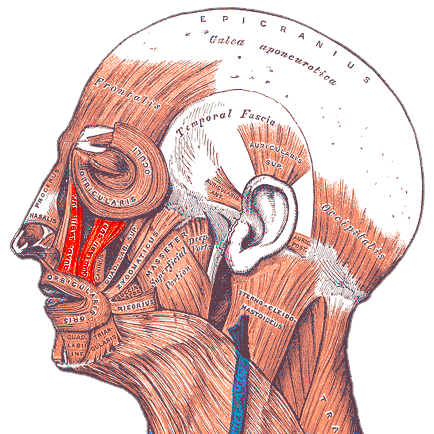
Source: Gray’s Anatomy (1918)
Support Your Skin from the Inside
Good skincare goes beyond products—nutrition plays a big role.
- Vitamin C supports collagen production (I often take it with collagen supplements).
- Iron is important for collagen and overall health.
- Vitamin E helps support healthy circulation.
- Protein is essential for skin and muscle—include fish, meat, eggs, or soy in your diet.
- Vitamin A promotes normal skin cell turnover.
When I eat well or apply skincare, I sometimes imagine my skin becoming healthier and stronger. It may sound simple, but being mindful of your body really matters.

Relieving Edema to Prevent Shadows
Dark shadows tend to appear more pronounced on days when your face feels puffy.
Try this massage technique: Apply gentle pressure to the inner corner, arch, and outer edge of your eyebrows, then sweep your fingers toward your temples.
You can also gently grasp your eyebrows and move them in all directions. Doing this during your bath or while applying cream helps prevent unnecessary friction.

The Liver, Kidneys, and Under-Eye Shadows
Stress and fatigue can reduce liver function.
The liver plays a vital role in protein metabolism, which supports the skin’s structure. When liver function declines, the body becomes less efficient at using protein building blocks, leading to weaker support for the delicate skin under the eyes and deeper shadows.
The kidneys help regulate the body’s fluid balance.
If kidney function decreases, fluid can accumulate under the eyes, causing puffiness that makes dark shadows more noticeable.
The liver and kidneys work closely together—the liver processes nutrients, proteins, and toxins, while the kidneys filter waste and excess fluid from the bloodstream.
When either organ’s function is compromised, fluid balance and skin metabolism can be affected, contributing to under-eye puffiness and shadows.
My Personal Approach
When I notice dark shadows under my eyes, I don’t always treat the eyes directly.
For me, tension in my forehead and scalp is usually the cause rather than weakness around my eyes.
That’s why I believe treatments should be tailored—what works for one person might not work for another.
And one last tip: if you work online, try using a ring light—it really brightens your appearance on screen!
Most importantly, don’t fixate on one small area.
Look at the balance of your whole face.
If you’d like help understanding what might be affecting your face, feel free to contact me.